 Seven2Offsuit
The Curiosity Call
Quill Inkwell: "But what if he's bluffing?"
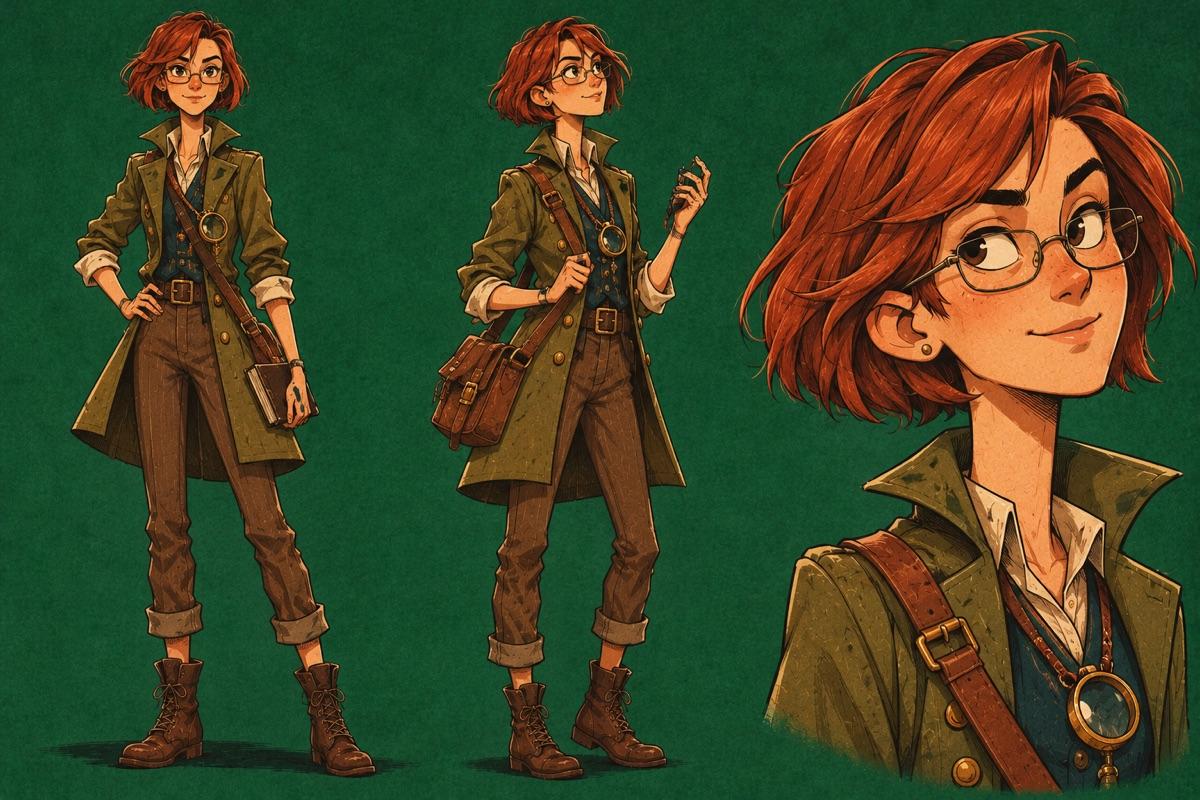
The spot
It is the river. Quill Inkwell holds A♦ T♣ on a board of Q♠ 9♦ 6♣ 3♥ 2♠. The pot is 100. The merchant bets 50. Ace-high beats only a bluff.
Call 50 to win 150, or fold?
What happened
Quill called to find out. The merchant turned over Q♥ J♥, and Quill wrote "Now I know" in the notebook. On average, knowing cost chips.
The math
- Price: call 50 to win 150
- Equity needed to break even: 25.0%
- Quill Inkwell's equity against the assumed range (43 combinations): 23.3%
- Expected value of calling: -3.49
Assumptions
- The merchant bets A-Q, K-Q, Q-J suited, the sets 99, 66 and 33 for value, and bluffs with J-T suited, T-8 suited and 8-7 suited.
- This is a simplification: every listed hand bets equally often, and combinations that share a card with the board or Quill Inkwell's hand are removed.
- Equity is exact: every hand in the range is run against Quill Inkwell's hand on the final board, with ties counted as half a win. There are no cards left to come.
- This is a close spot. Add a few more suited bluffs such as J-8 and Quill Inkwell's equity rises to about 30%, enough to call. Ranges are estimates, so a small change in your read can flip the answer. The point is that wanting to know is not a reason to call.
- A decision is judged by its expected value when it is made, not by the hand the merchant happened to show.
Lesson: Wanting to know is not a price. Pay only when the math says the call earns it back.
Open in the pot odds calculatorShare this spot
Characters and stories are original. Each episode is one reasonable reading of one spot, not the only correct play.