 Seven2Offsuit
The Right Moment
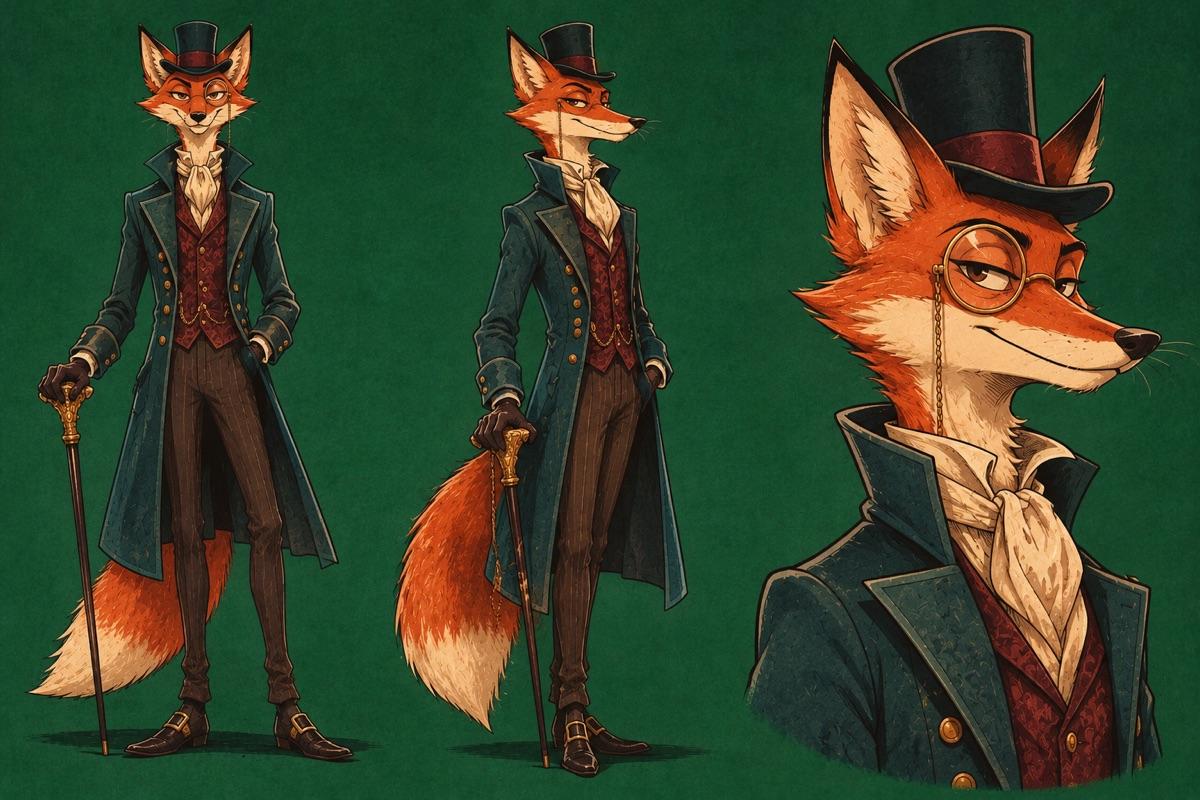
Lord Vulpin: "They'll never see it coming."
The spot
It is the river. Lord Vulpin holds J♦ T♦, a missed straight draw, on a board of Q♠ 8♠ 3♦ 7♥ 2♣. The pot is 100. The baron, who has chased spades all night and gives up when he misses, checks to him. Checking wins nothing: jack-high loses to any pair.
Bet 75 as a bluff, or check?
What happened
Lord Vulpin bet 75 with a thin smile. The baron looked at A♠ T♠, sighed, and folded.
The math
- Bluff: risk 75 to win the 100 in the pot
- Folds needed to break even: 42.9%
- Share of the opponent's range that folds (34 combinations): 64.7%
- Expected value of the bluff, compared with checking: 38.24
Assumptions
- The baron's range is A-K, the missed spade draws A♠ J♠, A♠ T♠, A♠ 9♠, K♠ J♠, K♠ T♠ and K♠ 9♠, and the made hands A-Q suited, QQ, 88 and 77.
- He calls with any pair or better and folds everything else. Every listed hand is equally likely, and combinations that share a card with the board or Lord Vulpin's hand are removed.
- Checking costs nothing and wins nothing, since jack-high loses to any pair. The comparison is the bluff against checking, which is worth zero.
- A bet of 75 into 100 needs the baron to fold about 43% of the time, and this range folds about 65%. If you think he also calls with ace-high or a pair of threes, the answer can flip.
- A decision is judged by its expected value when it is made, not by the hand the baron happened to show.
Lesson: The same bluff that fails against a calling station works when the listener can fold. Conditions, not courage.
Open in the MDF and bluff calculatorShare this spot
Characters and stories are original. Each episode is one reasonable reading of one spot, not the only correct play.